
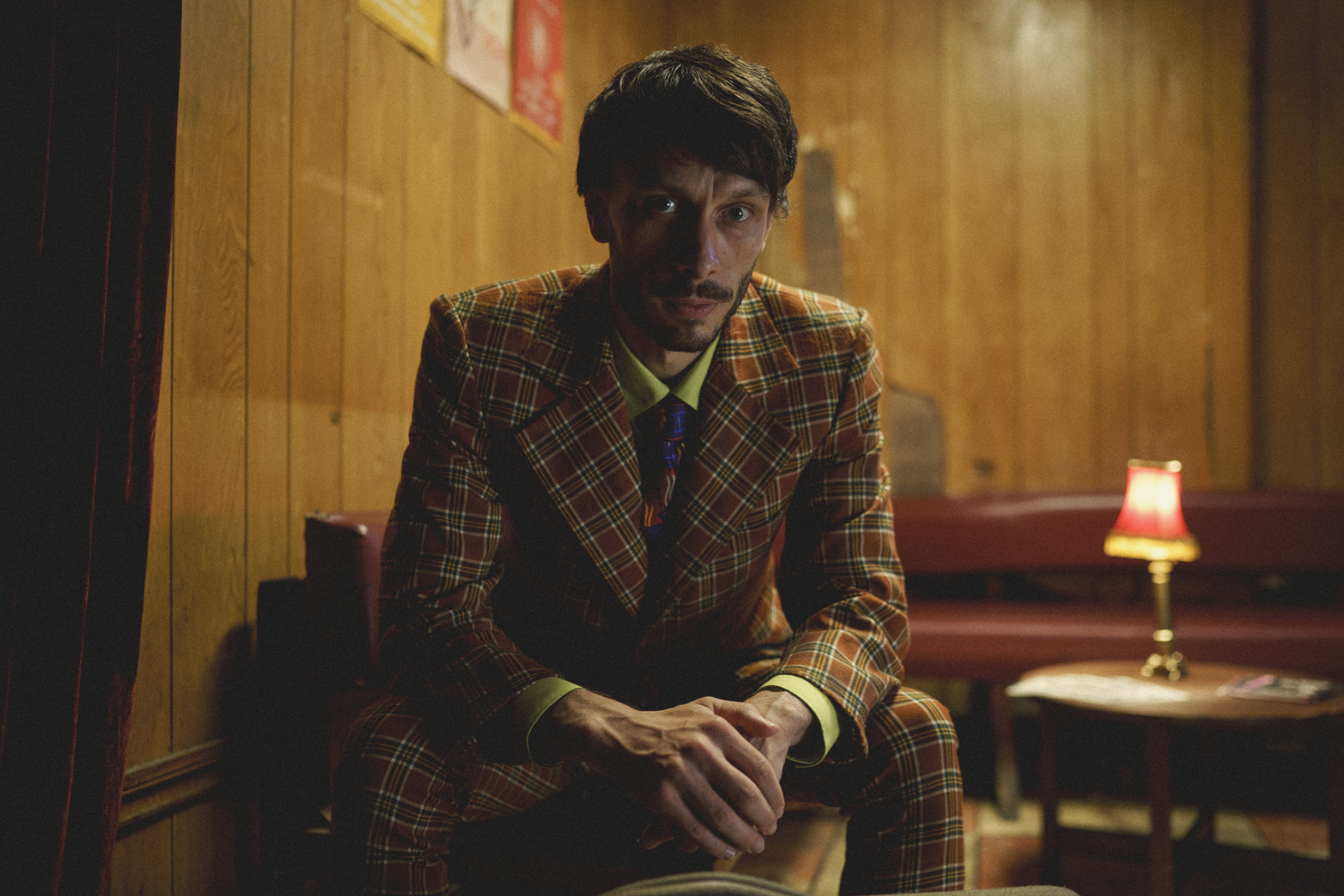

In this delightfully candid interview, costume designer Mekel Bailey takes us behind the scenes of Baby Reindeer, a series that has catapulted him into the spotlight with its Emmy-nominated contemporary costumes. Bailey, who recently received a nomination for Outstanding Contemporary Costumes for a Limited or Anthology Series or Movie, discusses the challenges and triumphs of designing for a show that merges personal narrative with vivid, realistic costume design. From his initial reaction to the script to the meticulous research for accurate details, Bailey offers a behind-the-scenes look at how he and his team, including costume supervisor Imogen Holness, brought the characters of Baby Reindeer to life. Join us as Bailey reflects on the emotional and creative journey that made this series a standout, and learn how his personal experiences and thoughtful design choices have contributed to its acclaim.
Spencer Williams: I am so happy to welcome Baby Reindeer costume designer Mekel Bailey. I’m so happy to meet you. How are you?
Mekel Bailey: I’m good. Thank you for having me, Spencer. I’m very excited to be here.
Spencer Williams: I can’t imagine what a whirlwind this must be. As a costume designer, you’re quite new to the scene with these big projects. Has your life felt like it has changed overnight?
Mekel Bailey: Everything you just said, times ten. But we’re having a great time with it. It is a whirlwind, but I’m so excited and happy. Everyone is loving the show and seems to be loving the costumes. I’m very grateful.
Spencer Williams: Let’s get into it. First, we have to talk about your recent Emmy nomination. You were nominated for an Emmy in Outstanding Contemporary Costumes For A Limited Or Anthology Series Or Movie for your work on Baby Reindeer. How did it feel to hear your name being called along with your costume supervisor, Imogen Holness?

Mekel Bailey: Yes, along with my supervisor, the amazing Imogen Holness. I was jumping around in the middle of a barbershop, talking to my agent and mum. It was all kicking off in that space at that moment. It still hasn’t sunk in. It still feels very surreal. I don’t think it will ever sink in, but it’s great to know that contemporary costume is valued. It was such a well-made show from every department. Together, cohesively, this is the result of working hard.
Spencer Williams: Everyone on this series should be so proud. I feel like contemporary costume is one of the hardest categories because you are responsible for a lot of subtle storytelling. This is such a wild project, and I think the best place to start is from the beginning.
The series was created and written by Richard Gadd, who also plays Donny. It is based on Richard’s live one-man show and his real experiences. Tell me about the beginning—how you got into this series, your reaction to the script, and, of course, meeting Richard.
Mekel Bailey: The journey began when I received the pilot episode of Baby Reindeer. I read it and I loved it straight away. The next step was creating mood boards. During my initial discussion with Matthew, the producer, we focused on developing mood boards for Donny, Martha, and a bit of Teri. The producers loved the boards, which led to further discussions. I had around six or seven interviews throughout a whirlwind year. It all started to take off around my birthday in 2022. On the night I turned 33 and was nominated for a British Arrows Craft Award, my agent informed me that we had been confirmed for Baby Reindeer. It was an incredible moment of excitement.

With a month before the job officially began, I spent that time researching and delving into the characters of Martha and Donny. I also had the chance to meet Richard, which was invaluable. We spent several hours together, discussing his personal experiences and how we envisioned the characters and their costumes. He even showed me some of his real clothes to give me a deeper understanding of him, as he was playing himself in the show. This initial phase of getting to know Richard and the characters marked the beginning of the Baby Reindeer process.
Spencer Williams: It’s such a daunting process. I would assume working to design costumes for a character based on a real person… who’s right in front of you… I can’t even wrap my brain around that.
Mekel Bailey: It was a great experience because you could bounce ideas back and forth with Richard, ensuring things were right. He gave us such creative freedom to explore and create with these costumes. It wasn’t micromanaged, but there was definitely a vision and an understanding that this is a true story.
Spencer Williams: The story takes place in and around London in 2015. I’m curious to know what sort of research and preparation you did to design costumes for a time that’s not even 10 years ago but still a little different from now.

Mekel Bailey: I was born and raised in London. Then, it was about looking at the script and where it was set in London. It was set in Camden, so North London. I immersed myself in that area. I sat in pubs and by the docks and just watched and observed people in the area to get as much essence and energy as possible from that time.
My second reference was more about people-watching, films, and TV shows set in those times or with storylines around those time periods. Again, to encapsulate the costume or the real period, even though “period” may not be the right word. That was my research for it. Many of Martha’s references came from sitting in parks and watching real people. It was about trying to be as honest and real as possible. Taking it back to 2015, it had to be done through charity shops to capture that character and ensure it wasn’t so stylized to look current.
Spencer Williams: The realism in this series is also one of the most disarming things about it. You could see yourself in these situations, in these clothes, and in these characters. Let’s talk about some characters, beginning with Martha Scott. What an incredible Emmy-nominated performance by Jessica Gunning. Throughout the series, the timeline during the stalking, it’s safe to say that Martha wears her heart on her sleeve. There’s realism to Martha, as we talked about. Sometimes her clothes are mismatched, or when she’s in a good mood, I feel like she dresses one way. Can you talk about the philosophy behind her costumes? I feel like we could do an entire podcast just about Martha.
Mekel Bailey: Where do we start with Martha? First, I met the lovely Jessica Gunning. She is a dream. We spoke about body, shape, everything to do with the character, and where we wanted to go. She was like, “Let’s do this.” Having that freedom from an actress to allow you to take it there helped me. There were no holdbacks or restrictions in any way.

Building Martha from my mood boards was about going out and finding what we needed. We visited charity shops all around London, different postcodes, different areas. In these different areas, you get different demographics, so that you will get different types of clothes. Then, we whittled it down by size, colors, and palettes. Once we had these pinks, greens, reds, and certain colors, we took everything back to production, building a collection for Jess to try on. We had a massive fitting, tried everything on, and started to build the costumes that way.
I looked at the script, determining what would be right for each scene, what Donny would wear, and the production’s colors. It was about working with different departments to make sure it all made sense. Taking it further with Martha – the clash of prints and tones was purposely done to evoke her emotions and state of mind. It showed how far Martha was—whether you feel sorry for her or find her scary. The polka dot dress represents anger and rage, while the animal print shows a predator. All these subliminals and connotations are within the prints we did with Martha.

Spencer Williams: I must rewatch now for all of these subliminal clues to her character. Donny is a performer and artist, if you will, so I believe there’s an element of style to Donny. He has a creative eye, but he’s also very real, especially when we see him in the quote-unquote present time when he’s working at the pub. I would love to know your process behind Donny and how his costumes speak to his everyday life.
Mekel Bailey: With Donny, I was looking at someone who was the typical lad, the British guy who tries to fit in—muscles, football, drinks a beer—all of those British connotations of what a lad or a man should be. You never want to stand out. You always want to fit in. Nine times out of ten, it’s simple, just a polo shirt. There’s not much to it, but where you make it special is that these are not new polos; they’re washed out. Many of those polos were either sitting in one of my best friend’s wardrobes for years, or they were from a charity shop. The clothes have been lived in, and they might have a little snag, or they might have a hole here and even be a bit tight.

You see him in many of these hoodies and jackets. That’s him always covering up, hiding, so it’s like he’s out of his shell. But again, making it relatable to this British audience. And I guess… worldwide!
Spencer Williams: That’s his way of escaping and covering up as much as he can because he feels very exposed all the time. I was lucky enough to head over to the Netflix studios for their annual NetflixFYSEE event, and I got to see one of Donny’s comedy suits. And when I saw his suit, I knew I had to get into this show. The suit is wild. Tell me about how you landed on this very wacky but perfect suit.

Mekel Bailey: Initially, in the pilot episode, it was a suit referenced with loads of pockets. So that was the first kind of sketch. Was it to be print on print? There were a lot of wild ideas and questions. We progressed and evolved into the tartan and plaid.
We’d play dress up with Richard and take nonstop pictures, trying to work out what was the right. We had to think about how it worked against his skin while telling a story. It’s a comedy suit, yet he takes himself seriously here. Do we go big shoulders? Do we go small? Are we fitted? Is it straight?

When we finally found the right fabric and called the fabric store, it sold out. So we had to do it all again, but we had already whittled it down to our top ones. It worked out even better. We also had to find the right tie to work with the suit and the colored shirts underneath. Each color also represents a different place where he is within himself.
Spencer Williams: It’s a very iconic piece. It’s a bit clownish, but then it flawlessly works itself into one of the most heartbreaking scenes. There is a fascinating comedy and tragedy aspect.


Mekel Bailey: His Converse also goes with the suit. If you look at the Converse, they have two colors on them. So, we give him this clown-like shoe that goes with the suit.
Spencer Williams: Going back to Martha. Is it true that pieces of your family’s wardrobe ended up in Martha’s costume?
Mekel Bailey: Yes. My grandmother has loads of clothes sitting at the house. I was like, “Hold a minute. This would be perfect.” There are a couple of pieces in there that we did end up using.

Spencer Williams: Brilliant. I’m a big fan of Teri in this series, played by Nava Mau. She is fantastic. Also Emmy-nominated at this point. Teri, to me, is just such a good, pure person. The voice of reason and your heart breaks for her because she gets intertwined in this nightmare. There’s a softness and femininity to her that’s also emphasized by her costumes. Tell me about your approach to Teri.
Mekel Bailey: Nava Mau is a dream. When you first meet Teri, she’s wearing the pink and green mini skirts with these crop tops. She’s this burst of new life. When they’re at home, she is this very put-together person and a middle ground. We then ensured stability came through in her costume to avoid pushing it too far. It has to have this sensibility and practicality to it, but in those moments, then when they’re out in the bars and the clubs, there is this fun energy to her.

Spencer Williams: Mekel, this show is hugely popular, and I’m so happy for you and everyone who brought this series to the world. Baby Reindeer has eleven nominations. I want to know what the series has meant to you and what you hope the audience takes away from watching it.
Mekel Bailey: Firstly, the series means so much to me. I’m honored to be able to work on a show that tells Richard’s true story, and he’s allowed us to tell his story with him. But I was also attracted to the story because there are moments in it that relate to me. I always want to work on things that I can relate to, that I’ve already experienced or somewhat experienced through another person.
I also want to work on projects that touch on ideas I advocate for. Being a gay person myself, Baby Reindeer touched upon so many layers that I feel speak to some important conversations. The show has meant a lot to me, and I am proud that I managed to do it.
There was definitely a lot of fear, but I had all the support from the right people. With the right team, we did it. I’m honored and grateful. I hope Baby Reindeer raises awareness and educates. It just opens your eyes to the world in that it reminds you that everyone has a story you can learn from.
Spencer Williams: Costume designer Mekel Bailey, thank you so much for joining us. This has been such a joy. I’m so happy for you and your team. Congratulations!
Mekel Bailey: Thank you for having me. Thank you!

