

The Fall Guy is more than just a pulse-pounding action film—it’s a cinematic experience packed with heart, humor, and high-fashion costumes. From dazzling costumes that reflect the film’s larger-than-life characters to designs that seamlessly blend practicality with style, Costume Designer Sarah Evelyn and Assistant Costume Designer Annie Loppert crafted a wardrobe as dynamic as the story itself.
In this exclusive interview, Sarah and Annie take us behind the scenes of their creative process, discussing the challenges of designing for intense stunts, the importance of layering costumes for versatility, and the careful attention to detail that makes every piece screen-ready. Join us as we explore how these talented designers brought the world of The Fall Guy to life through their costumes, leaving no thread untouched in the process.
Spencer Williams: I’m so excited to talk with both of you about two fantastic projects. The Fall Guy and Griselda (Read Part Two: Griselda →). We have to start with The Fall Guy, though. It’s such a fun film and a real love letter to the industry we’re all a part of.
The Fall Guy is all about directors, stunts, and, of course, costume designers. I want to start by talking about director David Leitch. David has a background in stunts, which I imagine influenced this film a lot. Can you tell me about that collaboration? What unique perspective did he bring to the project?
Sarah Evelyn: David’s story is fascinating. First, he’s such a film lover. He understands the craft so deeply. He’s also a true historian of stunts. There’s so much interesting stunt history, and it’s tied to the history of filmmaking itself. David knows all of that.
At the start of the film, he talked about how integral stunts are to the story. He’d share his inspiration for the stunt choreography while referencing the history of Buster Keaton and what he meant to film. You’re sitting there in awe, diving into these deep cuts of film history. It’s incredibly exciting—it all starts with his deep “film nerdology.”

His genuine love for the industry, stunts, and crew is so evident. He’s been at the bottom of the ladder—he’s been a PA—and he worked his way up. That perspective informs everything. On set, every person mattered, whether it was someone in the movie or someone behind the scenes.
Annie Loppert: It was this amazing moment of life imitating art. There were even times when other crew members confused the background actors for real crew members because of how accurately they were dressed and propped. It felt authentic, like you were looking at the real behind-the-scenes world. That’s exciting because it highlights all the intricate work that goes into making a production, from stunt performers getting knocked down over and over to someone hosing them off and resetting for the next take. It’s all those little details that bring this film to life.

Spencer Williams: That authenticity really shines. Another collaboration I love, though, is the one between you two. Let’s talk about your dynamic. Clearly, something works here, and it’s visible on screen.
Annie Loppert: Working with Sarah is like a learning curve at first—like dating. You’re figuring out their language and seeing if what they say is what they mean. But with Sarah, it quickly felt like there was this openness and willingness to mentor me. That kind of investment from the start made me want to double down and give my best. Over time, it turned into a real partnership.
Now, I feel like I understand Sarah’s language, her vision, and how to amplify it. Whether it’s guiding shoppers or helping the workroom stay on track, it all comes down to pushing her creative vision. It’s like being in Sarah’s brain—a fascinating place to be.
Spencer Williams: Jealous! Let me into your brain, Sarah.
Sarah Evelyn: [Laughing] Honestly, the job can be so intense. Finding someone who works the same way you do is rare. I strive to be professional, kind, and collaborative—qualities I think are vital in a creative environment where everyone’s putting their heart on the table.
Annie and I really clicked because we both care so deeply about what we’re creating. Annie is someone who will go the extra mile, never stopping at “good enough.” That aligns perfectly with how I approach projects. I try to put my ego aside and focus entirely on serving the project, and Annie has the same clarity and drive.

We’re also both natural collaborators. We want the best idea, no matter where it comes from, and we foster that kind of openness on set. Being aligned like this makes everything run smoother, from planning to execution. Annie’s ability to organize and channel creativity has been instrumental—not just for us, but for the entire crew.
Spencer Williams: It sounds like a dream team. What was your first project together? Was it Griselda?
Sarah Evelyn: Yes!
Annie Loppert: Griselda—trial by fire.
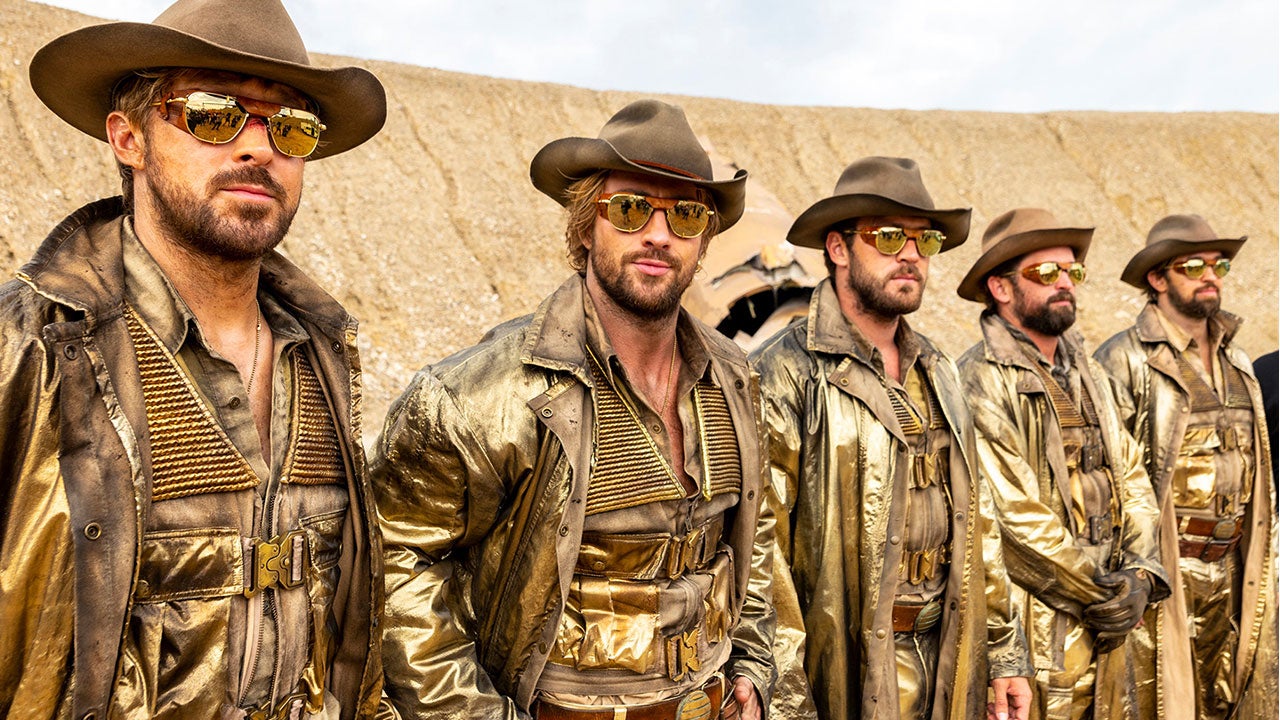
Spencer Williams: Forged in the fire, for sure. Speaking of fire, one of my favorite parts of The Fall Guy is the movie within a movie—Metal Storm. There’s that workshop scene with space cowboy and alien costumes, and I couldn’t help but think, “This must have been a nightmare for Sarah and Annie.” How did you even begin to approach designing this movie within the movie?

Sarah Evelyn: Oh, it was hard. The biggest challenge was keeping it within budget because it’s just seven minutes of screen time. The producers kept reminding us, “It’s only seven minutes. You can’t spend $3 million creating an entire sci-fi world.”
Spencer Williams: But it had to look good.
Sarah Evelyn: Exactly! We couldn’t compromise on quality. We had to be resourceful, and I’ll admit, we used a lot of gold.
Spencer Williams: Does gold lamé even hold up in fire?
Sarah Evelyn: No, thank God we were in Australia, honestly, because I feel like Australian workrooms are absolute magicians. You could hand them something as random as a piece of dirty Kleenex and say, “Could you make a suit out of this?” and they’d respond, “Sure, we’ll back it with something.”
It was a combination of factors, really. Everyone understood early on how important these costumes were. It was the first thing we were all working on, and the collaboration started immediately. David Leitch’s understanding of stunts, Jonathan Sela’s expertise in cinematography, David Shinneman’s production design, and Cecil O’Connor’s producing skills—keeping us in check but giving us the space to create—all played a role.

Then there were the incredible Australian stuntmen who were game for anything. They’d say, “Cool, I’ll wear gold lamé while being set on fire seven times.” Chris O’Hara, the stunt coordinator, was also phenomenal. He had a longstanding relationship with David Leitch and brought a “we’ll make it work” attitude.
Spencer Williams: If there’s any film to make it work, it’s this one.
Sarah Evelyn: Exactly! In many ways, Metal Storm’s visuals are a testament to what can happen when all departments collaborate. Of course, when we started pulling out gold lamé and bridal satin, I thought, This is it, I’m never going to work again. But David, Jonathan, and producer Kelly McCormick reassured me, “It’ll work, Sarah, we promise. We’ll camera test everything.”
Lo and behold, even in the early tests, adjustments were made to ensure everything looked great on film. It was that constant collaboration—camera tests, tweaks, and problem-solving—that brought it all together.
Annie Loppert: Absolutely. There was this continuous evolution throughout the process. Sarah’s initial designs would go through research and development. Kelly and David would visit, examine the costumes, and give feedback. Then we’d photograph everything and adjust based on how it looked. The on-location camera tests were especially pivotal, like when we needed to add depth to some of the silver pieces. We’d age and spray them, making improvements at every stage.
Sarah Evelyn: Yes, and one of the key lessons from past projects was to never let go of a design until the very end. For instance, the gold metal robes—every time the actors moved, the robes would ride up and look awful. We went back to the drawing board and essentially created an internal girding system to keep them in place. Nobody gave up; we just kept refining.

Spencer Williams: Annie, am I remembering this right? Was there a story about the gold lamé not holding up well with the stunts?
Annie Loppert: Oh, you’re remembering correctly! The gold lamé didn’t just fail—it disintegrated.
Spencer Williams: It just vanished?
Annie Loppert: Completely. But that’s where the brilliance of David’s direction and the stunt team’s ingenuity came in. We worked with them to ensure that even if parts of the fabric dissolved mid-scene, the camera angles and fire effects would hide it. That way, we didn’t have to reset and start fresh after every take.
Spencer Williams: That’s a level of mental gymnastics my brain can’t even begin to comprehend.
Sarah Evelyn: Watching the stunts was incredible. I mean, one of the stuntmen was literally set on fire seven times!

Spencer Williams: That actually segues perfectly into my next question. Often, in interviews, we talk about aging, dyeing, and creating multiples, but we rarely delve into the technical aspects of making costumes stunt-ready. With this being such a stunt-heavy film, how do you adapt costumes to withstand explosions, harnesses, fire, and all the other mayhem?
Annie Loppert: It starts with the initial design. Once that’s approved, you create the standard look, like Ryan’s main costume. From there, every stunt presents a new challenge. For example, in the third act, Ryan is running and crouching on a crane. Gold lamé has no give, so it kept ripping. We ended up using gold spandex in areas like the thighs to provide stretch for those movements.
Sarah Evelyn: And that spandex was invisible to the camera!
Annie Loppert: Exactly. But you end up with a massive spreadsheet tracking every variation—standing, crouching, harnessed, wearing a wetsuit. Sarah’s organizational system was vital for managing all of this without blowing the budget. Overestimating leads to unnecessary multiples, and underestimating means costly overtime for the workroom.
Spencer Williams: Sarah, you and stunts—this isn’t your first rodeo!
Sarah Evelyn: A little bit, I think, but this is where Annie and I’s partnership really shines. She takes over aspects like that so I can keep moving forward. Honestly, I didn’t even know about this spreadsheet, but I know Annie has it under control. I trust her completely because I know she cares just as much as I do. I know she wouldn’t settle for anything less than perfect, like saying, “Oh, just put the spandex pair on him for crouching.” She’s just as committed to making everything look right. It’s amazing to have someone to pass things off to and keep the momentum going.

Spencer Williams: Definitely. Well, let’s get into Ryan Gosling’s character. Ryan plays veteran stuntman Colt. He has a timeless yet contemporary look—like someone you’d recognize as a stuntman. He’s effortlessly cool with that long hair, a chill vibe, and undeniably attractive. I’d love to hear about your approach to this character.
Sarah Evelyn: In David’s films, we always develop the character collaboratively—David, the costume team, and Kelly—and then the actor comes on board and brings their own ideas. Ryan had a lot of input. He’s so creative, really soulful, experienced, and knowledgeable as a filmmaker. Plus, his stylist, Mark Avery, also brought incredible references.
We imagined Colt as a Southern California guy, maybe grew up in Manhattan Beach, got into trouble as a kid, then discovered motorbikes. He didn’t know what to do with his life until someone suggested stunt work. That backstory informed his style—classic surfer dude turned stuntman. Think Levi’s jeans, Red Wings, a t-shirt, and a well-loved jacket he wears again and again.

Spencer Williams: Simple and grounded, but he also has standout moments, like that neon green outfit—one of my personal favorites. He definitely has a sense of style—or at least he thinks he does.
Sarah Evelyn: That neon green look? All Ryan. He loved the idea of neon and kept coming back to it. It evolved over time, but eventually, Ryan was like, “Let’s put me in head-to-toe neon,” and we went for it. Then it was like, “Annie, where can we find neon fabric in all of Australia?”
Annie Loppert: So many Hail Marys for fabric sourcing in Australia.
Spencer Williams: Annie, I feel like you’re not welcome back there after buying out the stock.
Annie Loppert: Right? We needed 12 of those trench coats. Not only was it neon, but we needed about 48 yards of it.

Spencer Williams: And with stunt doubles and action scenes, that’s a lot of neon. Switching gears, let’s talk about Jodie, played by Emily Blunt. There’s a hilarious moment in the film where she wears a gardening hat on set and insists, “Everyone wears them.” It’s such a funny nod to set culture. I’d love to hear about the inspirations for Jodie. Did any of your own experiences help shape her character?
Sarah Evelyn: Designing Emily’s character was so much fun. Like you said, set culture has its own look. We were inspired by people we’ve seen on set. Emily, Annie, and I were constantly pulling inspiration from real life, like, “Oh, remember that person who wore this?” It became this mashup of all the cool set dressers, stylists, and crew we’ve encountered.
Of course, there’s a nod to the Greta Gerwig Barbie coveralls with the pink jumpsuit, but the Hawaiian shirt underneath? That’s classic set culture—very “Hawaiian shirt Fridays.” Plus, it’s a subtle callback to the 1980s era of the original The Fall Guy. Think less Matlock, more Magnum P.I..

The first outfit we tried on her—a jumpsuit with a Hawaiian shirt—just clicked. We also added a big leather belt, which is practical on set for holding walkies or tools. Our leather craftsperson always wore a belt like that, so we asked her to make one for Jodie. And those gardening hats? Totally legit. Surf hats, too—so many crew members from Southern California grew up surfing and bring that vibe to set.
Spencer Williams: Annie, did designing these costumes feel like just another day on set?
Annie Loppert: Definitely. It felt like life imitating art. Within our costume department, it created this camaraderie. Other costumers would come up to us with photos like, “Look at this beauty person on set today!” It became this constant source of inspiration, a celebration of the unique identities and styles people bring to this wild world we work in.
Spencer Williams: It’s such a fun way to poke fun at yourselves while showcasing a culture that outsiders might not understand, but insiders totally get.
Sarah, last time you were on, we talked about Bullet Train, which I loved for its vibrant use of color. The Fall Guy seems to have a similar energy. Between you and David Leitch, how did color play a role in telling this story?

Sarah Evelyn: Yeah. Well, David is very color-driven, and on this project, there was a clear decision: no more pink and blue. He’s done so much with those tones already. So it became a question of, “What’s next?” And Annie, correct me if I’m wrong, but I think it all started with Metal Storm. Early on, we decided Metal Storm would have a gold and silver palette—credit to Kelly McCormick for that. It wasn’t the direction we were initially heading, but once Kelly suggested it, everything clicked.
From there, we started leaning into golds, reds, yellows, and oranges—rich, warm tones. There’s still some neon, but we shifted toward greens rather than pinks. That choice set the tone: moving away from the pink-and-blue aesthetic and into something fresh.
Spencer Williams: It gives the film a grounded, earthy tone, but when you transition back into the real world, those pops of color create a refreshing contrast. It’s almost like catching your breath after being in the desert.
Annie Loppert: Exactly. And then you shift into more urban, city vibes.
Spencer Williams: Definitely. Speaking of standout pieces, let’s talk about Colt’s Miami Vice stunt team jacket. It’s such a fun, iconic piece—and suddenly, I feel like I need one. It’s not just stylish; it feels like it tells its own story.
Sarah Evelyn: Oh, there’s a great story behind that jacket. It’s a perfect example of the David Leitch process: “Best idea wins.” He’s always open to ideas from anywhere. We knew the jacket had to be special—maybe something Colt would wear throughout the film.
We were exploring ideas, and then Mark and Ryan found that jacket. When they showed me, I was both thrilled and frustrated—it was such a good idea, and I was annoyed I hadn’t thought of it first! But that’s part of the process: embracing great ideas, no matter where they come from.

Initially, David wasn’t sure—it was black, which felt limiting. But once he learned about its connection to his own career (he started out doing the Miami Vice stunt show!), it became serendipity. We knew it had to be in the film.
From there, Annie stepped in, making countless replicas, aging and matching them perfectly. Fun fact: the original jacket had blue quilting, not pink, but we reworked the colors and did a ton of R&D. It’s a testament to collaboration and adaptability. That jacket became an essential part of the film.
Spencer Williams: Annie, after all that, would you consider yourself friends with the Miami Vice jacket?
Annie Loppert: (laughs) I think I’m banned from the embroiderer in Australia at this point!
But honestly, pieces like that—along with the red race car jacket and the LeMay jacket—stick with me. I close my eyes and see the process: coloring pinks to make them less “bridal,” experimenting with different paints. In Australia, they airbrush more, while in the U.S., it’s often hand-painted.
It was a great learning experience, figuring out how to communicate the level of aging we needed, especially with techniques I wasn’t as familiar with.

Sarah Evelyn: Totally. Our aging and dyeing team worked on Furiosa, so for them, this was just another day at the office.
Spencer Williams: Of course—“Let’s bag another masterpiece!”
Sarah Evelyn: Exactly! They were incredible.
Sarah Evelyn and Annie Loppert’s work on The Fall Guy showcases their mastery of crafting costumes that are equal parts functional and visually stunning, perfectly complementing the film’s high-octane energy. But their talents don’t stop here.
Up next, we explore their journey into the gritty and glamorous world of Netflix’s Griselda, where crime meets couture in the late ’70s and early ’80s. Read Part Two: The Grit and Glamour of ‘Griselda’: Inside the Costume Design of Netflix’s Latest Crime Drama with Sarah Evelyn and Annie Loppert →

